Why Does Coffee Taste Sour or Bitter? How Roast Level Decides
October 30, 2026
10 min read
Coffee tastes sour when the beans are roasted too light or brewed too little, and bitter when they are roasted too dark or brewed too long. Roast level sets most of it before the coffee reaches your kitchen. TiA Coffee roasts to a medium, on purpose, so the cup lands between the two.
The short version:
A green coffee bean has almost no coffee flavor. Roasting develops it, and how far the roast goes decides the taste.
Light roasts keep the most acidity, which can turn sour. Dark roasts break that acidity down and build bitter compounds instead.
A medium roast keeps some brightness, develops sweetness and body, and stops before the bitterness builds.
Acidity and sourness are not the same thing. Good acidity is bright and clean. Sourness is that brightness gone wrong.
Dark roast does not have more caffeine. It has a stronger roasted flavor, which is a different thing.
It Begins with a Green Seed
A coffee bean is the seed of a fruit called the coffee cherry. Before roasting it is green, dense and full of moisture, and it holds almost none of the flavor we associate with coffee. Brewed green, it tastes grassy, vegetal and sharply acidic.
What the green seed does hold are the raw materials: sugars, proteins and a group of natural acids. Roasting turns those into the sweetness, body and brightness you taste in the cup. None of it is there before the heat.
This is why two roasters can buy beans from the same farm and produce cups that taste completely different. The farm decides what the bean can become. The roast decides what it does become.
What Roasting Actually Does
Green beans go into a hot drum, tumble and darken, and coffee comes out, usually within ten to fifteen minutes. A lot of chemistry happens in that time.
As the beans climb past roughly 300 degrees Fahrenheit, the Maillard reaction begins. It is the same browning process that gives bread its crust and seared meat its savory depth.
The bean’s sugars and proteins react to form hundreds of new aroma and flavor compounds, and the bean turns from green to tan to brown. Most of the nutty, chocolate and caramel notes in coffee come from this stage.
Caramelization follows as the temperature rises further. The sugars break down and brown on their own, adding sweetness and notes of caramel and toffee.
At the same time, the acids change. The main acids in green coffee, called chlorogenic acids, break down steadily as the roast goes on. The bright, pleasant acids that give a light roast its liveliness peak around first crack and fall the longer the roast continues.
Around 385 to 400 degrees, the beans reach first crack. Steam and gas build inside each bean until it pops audibly and expands. First crack marks the start of light-roast territory.
If the roast continues to around 435 to 445 degrees, the beans reach second crack, a quieter and sharper series of cracks as the bean’s structure breaks down and oils move to the surface. Second crack marks the start of dark roast.
Everything that makes a cup taste bright, smooth or bitter happens between those two points. Roasting is the skill of knowing exactly where to stop.
The Roast Spectrum, Stage by Stage
Each stage of the roast has its own chemistry and its own flavor.
Roast level
Where it stops
What it tastes like
The risk
Light
At or just after first crack
Bright, tangy, fruity or floral, lighter body
Brightness tips into sourness
Medium
Well past first crack, before second
Smooth, sweet, balanced, fuller body
Hitting it consistently takes skill
Dark
At or past second crack
Bold, roasty, smoky, bittersweet
Bitterness builds as it goes
Extra dark
Well past second crack
Smoke, char and bitterness
Little of the original coffee is left
Light Roast: Bright and Acidic
A light roast is stopped at or just after first crack. The beans spend the least time in the heat, so they keep most of their original character.
The acids have only partly broken down, which is why light roasts taste bright and lively, often with fruit or floral notes. If you want to taste the character of a single farm or region, this is where it shows most clearly.
The risk is that brightness turns into sourness. When a light roast is under-developed, or brewed poorly, the acids that should taste lively taste sharp instead. The difference between a vibrant light roast and a sour one is small.
Medium Roast: Smooth and Balanced
Keep roasting past first crack and the bean reaches the middle. The sharpest acids have softened, and the Maillard reaction and caramelization have had time to build sweetness and a fuller body. The character of the origin and the character of the roast are in balance, and neither one dominates.
This is where TiA Coffee roasts. A good medium roast does not ask you to appreciate a challenging brightness or push through a heavy bitterness. It tastes good, and it tastes good again the next morning.
Dark Roast: Bold and Roasty
At second crack and beyond, most of the original acids have broken down and the brightness is largely gone. In its place is a bold, roasty depth, with smoky and bittersweet notes and oil on the surface of the bean. The flavor of the roast becomes stronger than the flavor of the farm.
Plenty of people enjoy a good dark roast. It comes with a trade, though. As the chlorogenic acids keep breaking down, they produce compounds called phenylindanes, which carry a harsh, lingering bitterness. The darker the roast, the more of them there are. Much of what people call a strong coffee is this roasted bitterness.
Extra Dark: Smoky and Bitter
Extra dark roasts, sometimes sold as French or Italian roast, are taken close to the point of burning. Almost all of the origin character is gone, the body can thin out as the bean’s structure breaks down, and smoke, char and bitterness dominate.
A small group of drinkers want exactly that. For most people, it tastes more of the roast than of the coffee.
Why the Middle Is Harder Than It Looks
It is tempting to think the middle is the easy, safe default. It is a harder target than it looks.
The window is narrow. The roaster has to stop after the sharp acids have softened but before the bitterness arrives, after the sweetness has developed but before the roast flavor takes over.
That decision is made in seconds, by reading the color, sound and smell of the beans. Pull them a little early and the cup leans sour. Leave them a little long and it leans bitter.
Landing in that window batch after batch takes experience and control. With more than twenty-five years of blending and roasting experience guiding our team, hitting the middle reliably is what TiA Coffee is built on. We chose it because it produces the cup we believe most people want to drink.
Acidity Is Not the Enemy
Acidity and sourness are not the same thing, and the difference matters.
In specialty coffee, acidity is a compliment. It means the bright, clean, refreshing quality that good coffee can have, like the crispness of a green apple or the lift of citrus. Sourness is that quality gone wrong: sharp and unpleasant, the sign of a bean that was under-developed in the roast or under-extracted in the cup.
A balanced roast does not remove acidity. It keeps it in the right amount, in proportion to sweetness and body. When TiA Coffee says never sour, we do not mean never bright. We mean the brightness stays in balance and never becomes a sour edge.
Does Dark Roast Have More Caffeine?
No. Caffeine is very stable under heat and survives roasting almost unchanged, whether the beans come out light or dark. Measured by the scoop, dark roast can have slightly less, because the beans expand and become less dense the longer they roast.
What makes a dark roast feel strong is its roasted flavor, not extra caffeine. Strength of flavor and strength of caffeine are separate, and roast level changes only the first.
Roast Is Only Half of It
Everything above happens before the coffee reaches you. It is the roaster’s responsibility, and it sets the range of what the cup can be. The other half is how you brew it.
The same beans, roasted to the same balanced middle, can still taste sour or bitter depending on your grind, water temperature, ratio and brew time. Under-extract, and a well-roasted coffee tastes thin and sour. Over-extract, and it tastes dry and bitter. The same sour-to-bitter range that happens in the roaster can happen again on your countertop.
The fixes are small, and our guide to brewing specialty coffee at home covers them in detail. For now, if your cup leans sour, try a finer grind or a longer brew. If it leans bitter, try a coarser grind or a shorter one.
Frequently Asked Questions
Why does my coffee taste sour?
Usually because it was roasted too light or brewed too little. Under-developed beans keep sharp acids, and under-extraction pulls the acids out before the sweetness. If your beans are a medium roast, try a finer grind, a longer brew time or slightly hotter water.
Why does my coffee taste bitter?
Usually because it was roasted too dark or brewed too long. Dark roasting creates bitter compounds called phenylindanes, and over-extraction pulls out harsh, dry flavors. Try a coarser grind or a shorter brew time. If the beans themselves are very dark, the bitterness is part of the roast.
Is medium roast less acidic than light roast?
Yes. The acids in coffee break down as roasting continues, so a medium roast has less acidity than a light roast from the same beans. It still keeps some brightness, which is what gives it a clean taste rather than a flat one.
What roast does TiA Coffee use?
Medium. TiA Coffee roasts to the middle on purpose, after the sharp acids soften and before the bitterness builds. Our blends are arabica-led, and we never take them to a dark, smoky finish. The result is a cup that is smooth, balanced, and never bitter or sour.
Taste the Middle for Yourself
The best way to understand roast level is to taste it. Every TiA Coffee blend is roasted to a medium in Honeoye Falls, NY, and every bag carries its roast date, so you know exactly how fresh it is.
You can shop TiA Coffee here, or start with The Single Origin to taste one farm’s character at our medium roast. Orders over $50 ship free, and Subscribe & Save takes 10 percent off, with deliveries every one to four weeks.
Serving coffee at a café, restaurant or office? The same blends, roasted to the same middle, are available wholesale.
A 50 lb first order of house blend lands at $585 to $625 before labels and freight, about $9 a bag. Every line of the bill, and what a launch costs beyond the coffee.
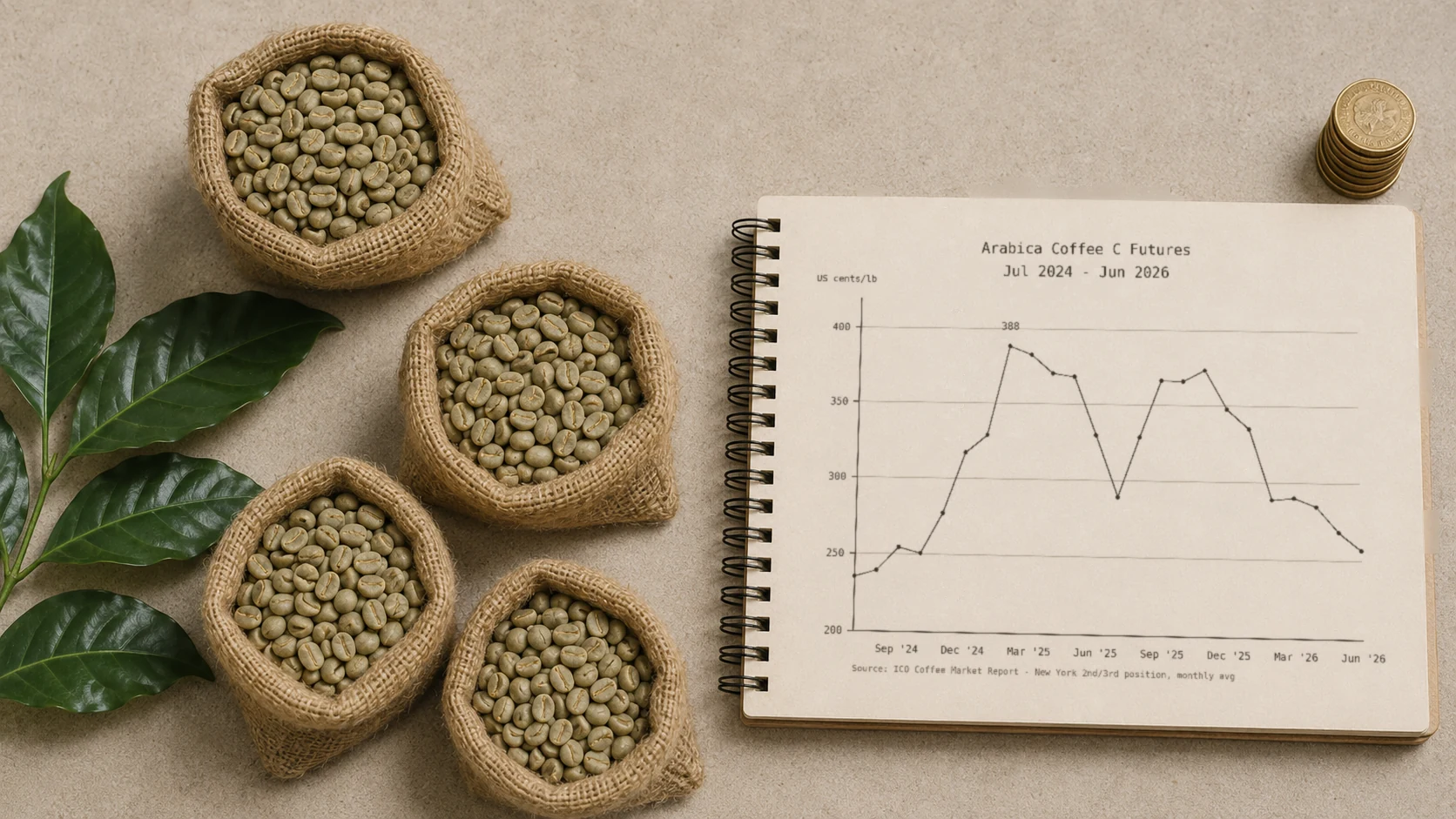
If you’ve noticed your favorite coffee costing a little more lately, you’re not alone. Global coffee bean prices have surged to record highs, impacting both specialty roasters and everyday coffee drinkers. But why is this...
At TiA Coffee, we believe that coffee is an art form, and in our kind of masterpiece, the freshest elements create the best experience. When it comes to coffee, freshness is more than just a buzzword—it’s the key to unlocking the vibrant flavors and aromas that define...
Read more
Join Our Newsletter
New roasts, offers, and brewing tips — straight to your inbox.